On the line, annealing isn’t some polite pre-step. It’s the control point that decides whether your next temper or bend runs clean—or turns into scrap. If heating is off, you get thermal stress, wafer bow, and coating stress fractures that only show up later in inspection. We built the precision annealing infrared lamp to hit the lehr curve exactly, without chasing drift.
De gloeicurve is op de productielijn geen vrijblijvende voorbereidende stap. Het is het controlepunt dat bepaalt of de volgende afkoeling of buiging foutloos verloopt of tot afval leidt. Als de verwarming niet correct is, ontstaan thermische spanningen, kromming van de wafer en spanningsscheuren in de coating die pas later bij inspectie zichtbaar worden. We hebben de precisie-ontspanningsinfraroodlamp ontworpen om exact de lehrcurve te volgen, zonder achter temperatuurschommelingen aan te lopen.
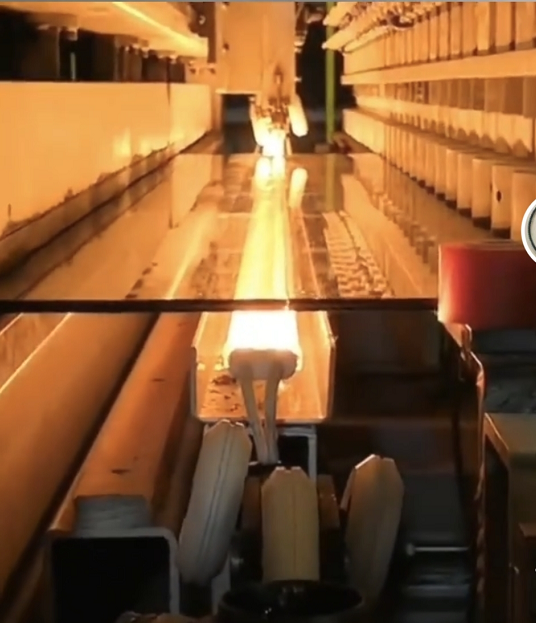
The NIR lamp uses short-wave infrared with a fast-response quartz emitter. It delivers energy straight into the glass surface, not the air around it. That gives you a tight thermal band, quick ramp control, and repeatable hold temperatures across the full belt width. De NIR-lamp maakt gebruik van kortgolvige infraroodstraling met een snel reagerende kwartsverhitter. De energie wordt direct in het glasoppervlak gebracht, niet in de omliggende lucht. Dit resulteert in een nauwkeurige thermische bandbreedte, snelle temperatuurstijging en reproduceerbare constante temperaturen over de volledige breedte van de transportband.
The payoff is a more uniform thermal field. No more local hot spots and cold edges that start micro-cracks before the glass even leaves the line. Het resultaat is een uniformer thermisch veld. Geen lokale hotspots of koude randen meer die microbarsten veroorzaken voordat het glas de lijn verlaat.
In practice, that means fewer rework sheets on low-iron and coated products, and more consistent optical quality on automotive glazing. Cycle times stay stable because the lamp hits setpoint fast and holds it without overshoot. You keep throughput up while still respecting the annealing schedule. In de praktijk betekent dit minder nabehandelingen van low-iron en gecoate producten en een consistentere optische kwaliteit bij autoglas. De cyclustijden blijven stabiel omdat de lamp de ingestelde temperatuur snel bereikt en deze zonder overshoot vasthoudt. Hiermee blijft de doorvoer hoog, terwijl het ontspanningsproces nauwkeurig wordt gevolgd.
Energy use drops, too. The energy goes where it needs to—into the glass—instead of heating the surrounding structure and exhaust. Ook het energieverbruik daalt. De energie wordt gericht in het glas gebracht in plaats van de omliggende constructie en afzuiging te verwarmen.
Installation is straightforward as a drop-in module, but alignment matters. Match the lamp pattern to your belt width and emissivity. If you don’t, you’ll see edge-to-center temperature spread that shows up as bow and stress marks. De installatie is eenvoudig als een plug-in module, maar uitlijning is cruciaal. Stem het lampenpatroon af op de breedte van de transportband en de emissiviteit. Zonder deze afstemming ontstaat er een temperatuurverschil tussen rand en midden, wat zich uit in kromming en spanningsmarkeringen.
Keep the quartz window clean and watch the reflector condition. Dust and oxidation scatter intensity and kill repeatability.Treat it like a calibrated tool, not just a heater, and the annealing curve stays honest shift after shift. Houd het kwartsvenster schoon en controleer de staat van de reflector. Stof en oxidatie verstrooien de intensiteit en verminderen de reproduceerbaarheid. Behandel het als een gekalibreerd instrument, niet alleen als een verwarmingselement, zodat de ontspanningscurve bij elke ploegendienst betrouwbaar blijft.