



Wall-Mounted IR Garage Heaters: The Real-World Guide to Sizing Them Right
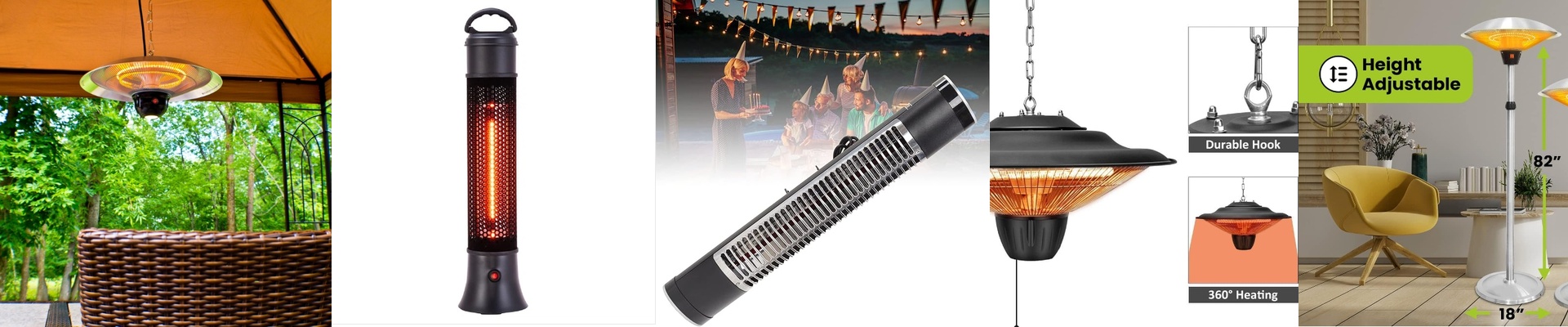
Let’s talk about wall-mounted infrared garage heaters. These things aren’t trying to be everything to everyone. They’ve got one job: deliver heat straight where you need it, when you need it. Forget warming the whole air. Infrared heaters warm objects and people directly—so the heat feels more immediate, and you’re not paying to heat empty space.
Power and size: it’s simpler than you think
Here’s the heart of it: power has to match your space. A 1500W infrared tube can typically cover around 15–20 square meters in an open garage. Try to stretch that same unit across 30 square meters, and you’ll end up with a struggling heater that overheats—and you still standing there cold. We size wattage based on square footage, yes, but also ceiling height. Higher ceilings mean the heat has farther to travel, so you need more power to make sure it actually reaches the floor. And because these heaters are wall-mounted, placement matters. Not just for clearance—for the beam pattern to do its thing the way it was meant to.
The parts matter—quietly, stubbornly
Inside, infrared heaters rely on quartz tubes with a coating designed to focus the energy in the far-infrared range. That matters because solid surfaces absorb that kind of heat more effectively. Then there’s the hardware. An R7s connector, for example, is built to handle serious current and high heat without loosening or melting. This isn’t plug-and-play like a lamp. It’s hard-wired, built for steady, repeated use, and treated like a real piece of equipment.
What it feels like in a working garage
In a shop, the payoff is immediate. You’re not heating the entire building—just the work area. You flip it on, the heat arrives fast, and it uses less power than a forced-air system would to do the same targeted job. But there’s a trade-off to keep in mind. High-wattage units create intense, localized heat. So you need to think about what’s nearby—equipment, tools, materials—and make sure you’ve got enough ventilation to keep the overall temperature from climbing too high. Size the heater for the space. Wire it properly. And you’ve got a dependable workhorse that keeps its head down and does the job, day after day.