Stop Fighting Your Quartz Lamps: Why Modules Beat Single Tubes
Buying one quartz lamp is easy. Anyone can do it. But try putting fifty of them into a precision bending or curing line, and suddenly you’ve got a massive engineering headache on your hands. I’ve seen too many shops waste weeks on the manual grind—wiring, aligning, and mounting tubes one by one. It’s tedious. Worse, it usually leads to uneven heat zones or lamps that burn out way too early because something was just a few millimeters off.
Let us handle the mess
Here’s how we do it differently: we move all that frustration out of your shop and into our factory. Instead of sending you a box of loose lamps and wishing you luck, we build pre-assembled heating modules. We take the quartz tubes, the reflectors, and the wiring, and we lock them into a single chassis. When they arrive, they’re basically “drop-in” replacements. No more spending hours fiddling with alignment. Plus, there’s a hidden danger when you handle tubes manually. If a technician touches the quartz glass with bare hands, the oils from their skin stay there. Once the lamp heats up, those spots turn into hot spots.**Pop.**The lamp fails. By using modules, your team never has to touch the glass.
The reality of high-density heat
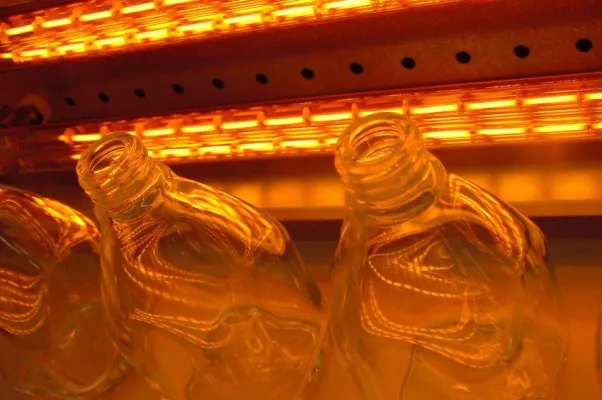
When you’re dealing with high-wattage quartz, you’re dealing with an incredible amount of heat. If you go with shortwave halogen lamps for fast curing, you can’t just think about the part you’re heating; you have to think about the frame holding the lamps. If the clearance is wrong, the chassis will warp under the constant thermal cycling. We’ve spent a lot of time figuring out the exact spacing needed to keep everything straight and stable. And a quick heads-up on the power side: check your electrical footprint. A single 2kW lamp is a breeze. But a 20kW bank? That’s a different animal. You’ll need a beefy power supply to handle that initial inrush current, or you’ll be tripping breakers every time you hit the start button.
Just plug it in and go
We prefer a “done for you” approach. We handle everything from picking the right lamp to building the final wiring harness. The modules show up ready to connect to your PLC. This skips the whole “trial and error” phase of heat mapping. You don’t have to spend days tuning the system and crossing your fingers. You just get a consistent thermal profile across the whole workpiece, which means way less scrap in the bin and a lot more sanity for your team.