Why Fast-Response IR Lamps are a Lifesaver for Glass Annealing
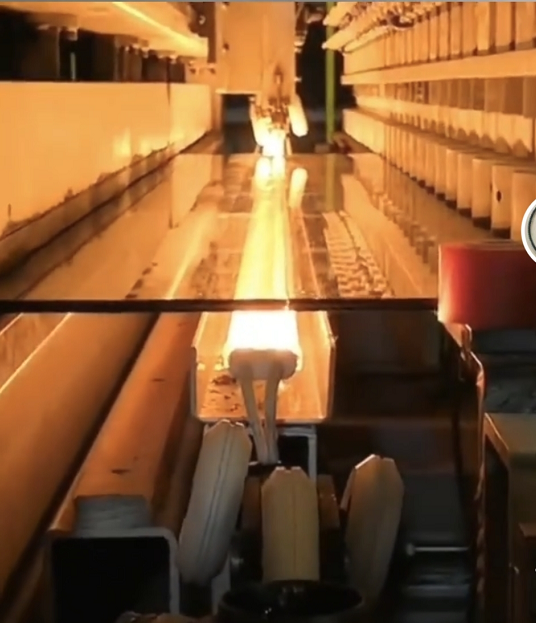
If you’ve ever worked with glass, you know the stress of annealing. You need the temperature to be exactly right to get rid of those internal stresses, but if you mess up, the whole part distorts. When you’re running a continuous lehr, you can’t afford to wait around for your equipment to catch up. That’s why we lean on shortwave infrared (SWIR) lamps. They just hit the target immediately. Instead of wasting time heating up the air around the glass—like those old-school resistance heaters do—these lamps dump energy straight into the glass surface. The beauty of the speed Shortwave IR works at a higher frequency, so the heat actually sinks into the glass quickly. We use these for “online” annealing because they hit full temp in seconds. It gives you a lot of freedom. If your belt speeds up, you just crank up the power. You aren’t fighting that annoying thermal lag where you’re waiting for a massive heater to warm up. It’s just… instant. Big heat, small space Most of us don’t have room for a massive oven taking up half the factory floor. We need high wattage in a tight footprint. To make that happen, we use quartz-halogen tubes. By packing a ton of wattage into a narrow tube, you create a high-intensity heat zone. It’s the only way to get enough heat into thick glass sections without needing a machine the size of a house. The trade-off (because nothing is perfect) Now, look—this isn’t magic. High-density IR has its quirks. These lamps run incredibly hot and they pull a lot of juice. If you’re pushing 2000W or more per tube, you can’t cut corners on your wiring. Use cheap sockets, and they’ll burn out. And keep an eye on your cooling fans. If those stop spinning, your sockets will literally melt. It’s a powerful system, but you have to respect the heat. Keeping the line moving The last thing you want is to stop the entire production line just because one lamp burnt out. We use standardized connectors so you can just pop a new one in and get back to work. Because the lamps react so fast, the zone hits its temperature setpoint almost the second you flip the switch. No waiting, no dipping in your annealing curve, and way less scrap in the bin.