Stop Just Swapping Heaters: Why You Need to Look at the Whole Line
Ordering a new heater is the easy part. It’s a click of a button. But getting your glass to actually stop cracking? That’s where things get tricky. Too many engineers treat annealing heaters like lightbulbs—you just swap them out when they blow. But if your scrap pile is growing, the lamp usually isn’t the culprit. The real problem is almost always the thermal profile of your entire line.
The tricky part of precision annealing
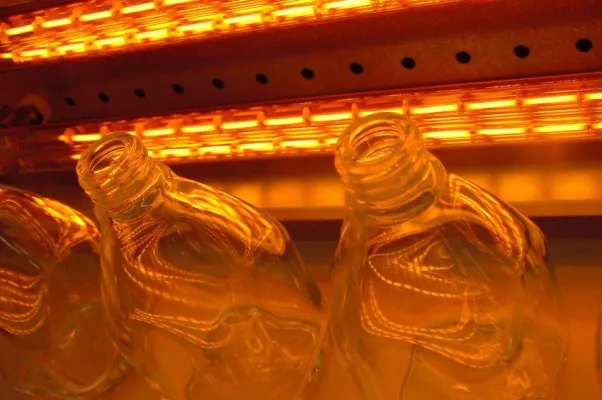
To get glassware right, you need a very specific temperature gradient. You have to pull out those internal stresses without accidentally melting or warping the piece. We lean toward high-density infrared emitters because they heat up fast and let us control the zones precisely. But we don’t just look at the wattage on a box. We care about how your specific glass reflects heat and exactly how far the heater sits from the workpiece. Here’s the thing: if you jam a high-wattage tube into a tight space without thinking about the heat soak, you’ll end up with hot spots. That’s a recipe for uneven cooling, and that’s exactly why your glass fails.
Why a spec sheet isn’t enough
A data sheet tells you what a heater can do in a perfect lab. It doesn’t tell you if your conveyor is moving too fast for the heat to actually sink in. That’s why we’d rather get our boots on your shop floor and run a real diagnostic. We want to see what’s actually happening. We look for the stuff the manual misses: *Where the heat is leakingout of the oven shell. *Zone drift, or those spots where heaters have shifted or lost their punch. *Airflow issues, like a cooling fan that’s accidentally clipping the heat before it ever touches the glass.
The trade-off you should know about
It’s tempting to just crank up the intensity to push more product through the line. But there’s a catch. Pushing more power puts a lot of stress on your electrical panels and wears out your connectors faster. If you move to a higher-wattage setup, you’ve got to make sure your wiring can actually handle the draw. Otherwise, you’re just trading cracked glass for overheating terminals. We do the diagnosis first. Once we know why your line is struggling, then we talk about the hardware.